
Getting Back On Track
What To Do When You Fall Off Your Fitness Routine


For the summer, I’m scaling back the newsletter to once a week. In reality, while I should be out enjoying the sun, it’s a very busy time of the year for us.
I’m also going to feature a fun fitness story each week, highlight a fitness app and finally, share some other Substacks that I follow and read.
This and That
I came across this story that highlights fitness trends and gadgets from the 80’s. Jane Fonda, Billy Blanks and Suzanne Somers are there, but sadly, no Bowflex!
App of the week - Ok, I know not everyone of you is a golfer, but this app is a must have if you are an Apple Watch owner. It’s called Golfshot and while they’ve recently raised their price to $49.99 per year, it’s definitely worth it (I pay a ridiculous $18.99 per year, as long as I don’t cancel). The app will provide flyover views of the golf course you are playing, automatic shot tracking (Apple Watch) and using GPS, will provide distances to the green (front, middle and back). Automatic shot tracking is perhaps the coolest feature. Using your Apple Watch and AI, it detects and tracks when you hit a shot. At the end of the hole, you account for your number of putts and record your score. As a bonus, you can turn on the fitness feature and record your round as a workout.
Substack - Two of my favorite writers have new posts out.
Millionaire's Shortbread - In the latest newsletter edition of the Secret Life of Cookies, Marissa Rothkopf provides this recipe for Millionaire’s Shortbread, which she says is actually a bar cookie (or tray bake), with layers of crumbly shortbread, thick, creamy caramel and a chocolate top.
TrueLife Pursuit - Personal Evolution Guide David Page discusses the best advice he ever received while making his transition to the ranks of the self-employed.
Feature
Whether you’ve been sick, injured, busy with work or family or have just fallen off your fitness routine, don’t panic. It happens to everyone. I was in a great groove through April and I felt really good about my fitness routine. I got Covid in early May and couldn’t work at all for 8 days. Even when I came back, it took me a bit to get back into a groove. I recently suffered a small setback in the form of golfer’s elbow (first, WTF and second, yes, it’s a thing) and work has been incredibly busy, so I just haven’t been as motivated to stick to my plan and especially, my strength training as I was through the first four months of the year. But I have managed to continue to exercise and today, I’ll offer some suggestions about how you can get back on track after a hiatus from your fitness routine.
The Research
How quickly do you lose cardiovascular fitness or strength? The answer depends on a number of factors, including sleep, age, diet and fitness levels. With that said, the research suggests that for endurance athletes, a loss of cardiovascular fitness and endurance starts to happen after as little as 12 days of no exercise. Strength and even muscle mass deteriorates much more slowly, though age is more of a factor when it comes to loss of strength.
Now this of course does not negate the necessity of rest days or even taking a break from exercise is that is what you need. It’s simply meant to show how quickly one can lose fitness levels during periods of inactivity.
Additionally, how you approach either maintaining or rebuilding your cardio and strength fitness levels is going to depend on the reason for the break.
When Motivation Suffers

Motivation is perhaps the easiest and at the same time, most difficult thing to address. If you have a specific goal in mind, it should be easy to stay on track, but it can also be hard to see the light at the end of the tunnel, especially when you’re in a rut. I’m certainly not always motivated to workout, but for me, it starts with intent.
I’ve beaten to death how planning my day each morning helps me stay focused. I’d like to share what that actually means in practice, noting that there are countless ways to do this.
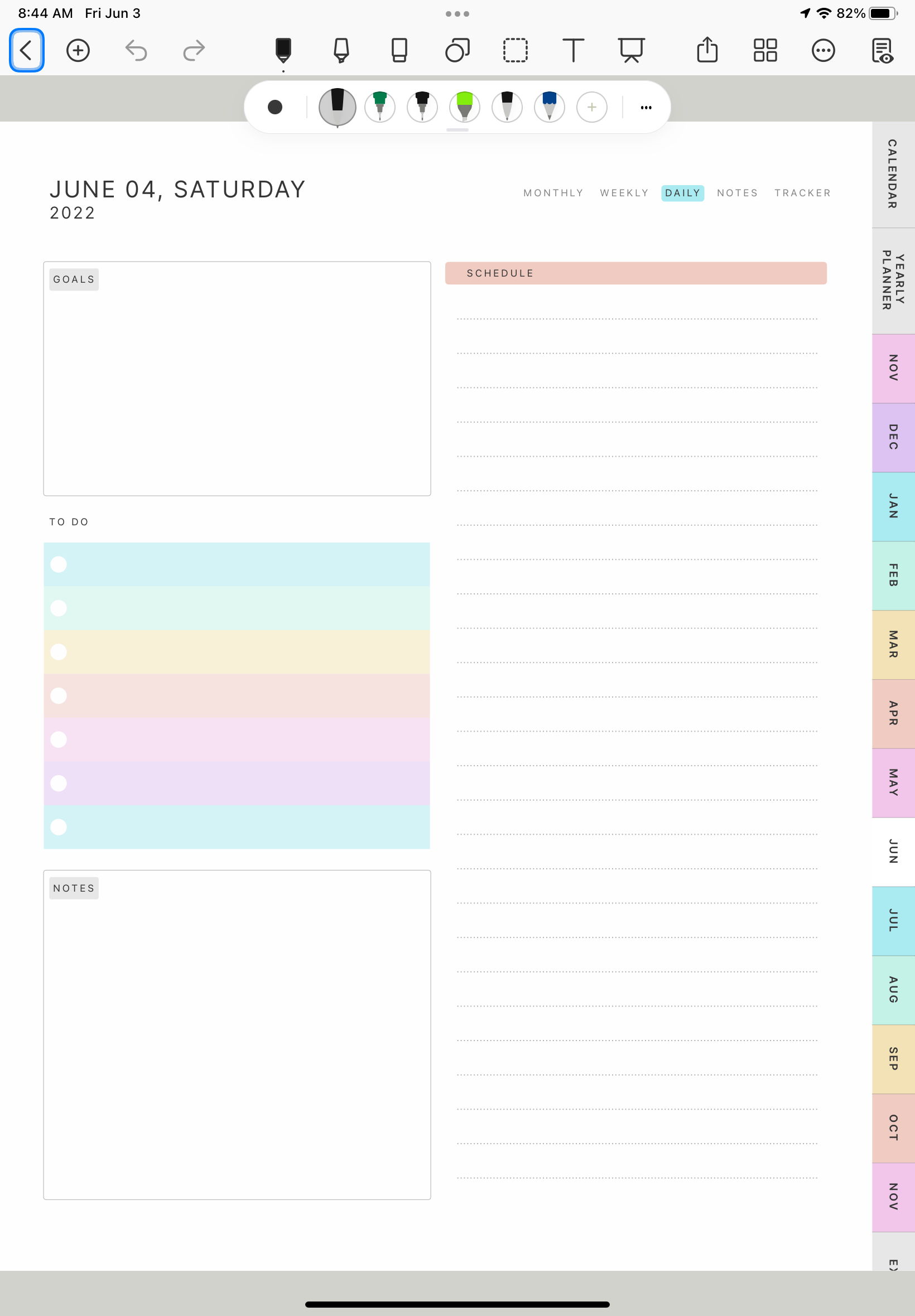
I’ve written in the past about an iPad app I use called Noteshelf. The app is available on iPhone and Mac as well, but for me, it’s more useful on the iPad because I can write everything out, make notes throughout the day and cross things off (how satisfying!) when they’re completed. The app offers tons of templates as well, including a very handy day planner that breaks out the day in terms of goals, tasks, notes and schedule.
Goals
I use this section to set overall goals for the day, including exercise goals. I’m specific in terms of what I want to accomplish, so I won’t simply set “exercise today” as a goal, but rather, layout more specific goals (20 minutes of cardio; 20 minutes of chest and back; 5 minutes of stretching). I will also include my high level work (transition to new payment provider) or personal (improve my brain fitness) goals. Setting goals doesn’t necessarily mean you will achieve them, but writing them out makes them real and shows your intent to accomplish them.
To Do
I use this section to write out the tasks that I want/need to accomplish in a given day. This will include tasks that will be required to achieve my goals (schedule cardio and strength training via the Peloton app), as well as phone calls or meetings I need to schedule and anything really that is task based. I will also review the accomplishments of the previous day and carry over anything that slipped.
Notes and Schedule
These sections are pretty self explanatory. The notes section of the template is quite small, so I’ll use this for important things that come up throughout the day. For more extensive note taking, there are additional pages within the app that can be used.
My schedule lives in the cloud electronically, but I review it and write it out every morning. That includes everything from scheduling my workouts, to work appointments and school activities.
Overall, this has been a huge tool for me to stay on track and to stay motivated. I view it as the calm before the storm. I do this before checking email or anything else for that matter (except for making coffee!) and it sets the tone for my day.
Coming Back From Injury/Illness
There is perhaps nothing more frustrating than having your fitness routine halted by illness or injury. The best athletes in the world get sick and injured and despite your best intentions, it’s going to happen to you. How you restart or stay active during these periods are going to be largely dependent on previous fitness levels, age, and length of time away from activity.
Don’t rush back - It can be tempting after you start feeling better to try to get back to your fitness routine, but avoid the urge to come back too quickly. Your body needs time to recover and you’ll benefit more if you wait a little longer to get back to your regimen.
Take it slow - Even if you’re out for a week, I encourage you to not jump back in where you left off. Instead, work your way back over a period of time, allowing your body to gently return to the intensity levels you enjoyed pre-illness/injury.
If you can, stay active in other ways - If you’ve suffered an injury to say, your forearm playing golf (ugh, I cringe as I write that), but you are still able to run, walk or bike, even at a reduced duration or intensity level AND you are not at risk for further injury, go for it. Whereas the cardiovascular impact of no activity can be felt after 12 days, the impact of decreasing your frequency or intensity prolongs that to 35 days. In short, something is absolutely better than nothing at all.
Too Busy to Exercise
In theory and on paper, there is always a point in the day when you can exercise, whether it’s before your day starts, during your day, or after the day ends. If your goal is to train for 30 minutes and you have 15 minutes in the morning and 15 minutes in the evening, I’ve suggested breaking workouts up to fit your schedule that still allow you to accomplish your goals. However, “the best laid plans of mice and men often go awry.” Things come up during the day. Work projects drag on longer than anticipated. We have family and friend obligations. Nobody is immune to have their plans interrupted.
You Still Have to Build It Into Your Day - It’s really easy to ignore your fitness when you are anticipating a particularly busy or stressful day, but start with your intent to exercise. Set your goals and schedule the workout. If it needs to fall off, so be it, but don’t deviate from planning it.
Don’t let it drag on - Missing a day or three or even a week is not the end of the world. But the longer you go without exercise, the easier it will be to continue down that path. I’ve been there. A week has turned into months and at that point, it just becomes much harder to start back up again.
Just move - It’s not always going to be possible to get out of the office. If that’s the case, get up and walk around. If you are able, take a 10 minute break and walk outside.
It’s not always easy after a break from fitness and it can be frustrating as hell when you’ve been away for a while so take it slow and don’t be hard on yourself!
Wow!!